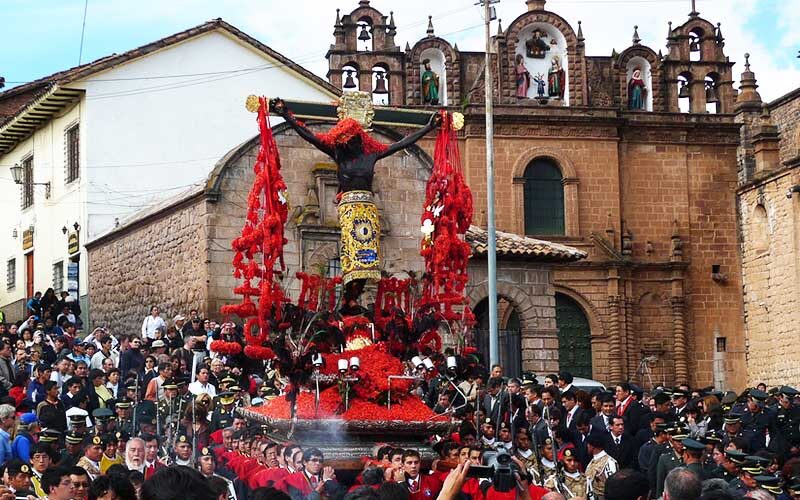
Holy Week in Cusco is a festive period that draws thousands of visitors from around the world. The religious and cultural traditions during this time are marked by powerful displays of faith. For the people of Cusco, the days leading up to Holy Week are especially important for expressing and reaffirming their devotion.
During Lent, considered a time of penance, devout Catholics prepare for the celebrations of Holy Week. Traditional processions and ceremonial attire have been passed down through generations to preserve their faith. Here, we explore why Holy Week in Cusco is a unique celebration that honors both tradition and history.
Many churches in Cusco, including the Cusco Cathedral, keep their doors open throughout Holy Week to welcome millions of worshippers. Among the large crowds, processions fill the streets with an atmosphere of devotion and reverence. This is how the celebrations begin.
Local beliefs include the idea that plants, herbs, and roots gain healing properties on Good Friday. Farmers from across Cusco gather in town squares to offer a variety of medicinal herbs.
The Lord of the Tremors, or “Taytacha de los Temblores,” draws much of the population. This main procession occurs on Holy Monday, the day after Palm Sunday. A crucified Christ with indigenous features is carried through the Plaza de Armas of Cusco. The highlight is when the Lord of the Tremors blesses worshippers, carried on the shoulders of porters. Tourists witness the deep faith of thousands of women weeping before the Andean Jesus.
Marking the end of Lent, Palm Sunday officially begins Holy Week. Devotees attend Mass in the morning for ceremonial psalms. In Cusco, it includes the blessing of palm leaves and woven crosses, which are hung behind doors as a sign of protection. Many also visit the Cusco Cathedral for the Palm Sunday Mass in Quechua.
Holy Monday is a symbolic day. The Archbishop of Cusco offers the Communion Mass in the Cusco Cathedral. The highlight is the procession of the Lord of the Tremors, showcasing faith and tradition maintained for decades.
On Maundy Thursday, local authorities participate in the Blessed Sacrament procession. Masses are held in all churches. The Bishop performs the washing of the feet ritual, traditionally with twelve elders today. It is also customary to visit seven churches at night.
Good Friday is marked by twelve dishes representing the twelve disciples of Christ. In Sayllapata, Andean-style soups such as k’irku or whole-egg soups are prepared. Like many Catholic towns, red meat is avoided. Ingredients highlight Andean crops like potatoes, ollucos, corn, and wheat, along with regional specialties like steamed trout and sautéed cod.
Easter Sunday begins with Mass at 7 a.m., celebrating the resurrection of Jesus. Visitors in Cusco will witness not only the Masses but also the procession of the risen Christ. With lively streets and traditional food at every corner, Holy Week in Cusco is a vibrant experience for visitors of all beliefs.
Discover more unforgettable experiences by booking a trip to Machu Picchu with Inca Rail today.


Save up to 20% on tours! Get exclusive access to member-only offers by email.